How a lobster-themed open-source project went viral and what it tells us about the next 18 months of agentic AI ?!
Last week, a curious thing happened in Silicon Valley. While the tech giants were busy announcing incremental updates to their chatbots, developers were frantically buying Mac Minis to run a lobster-themed AI assistant that actually does things.
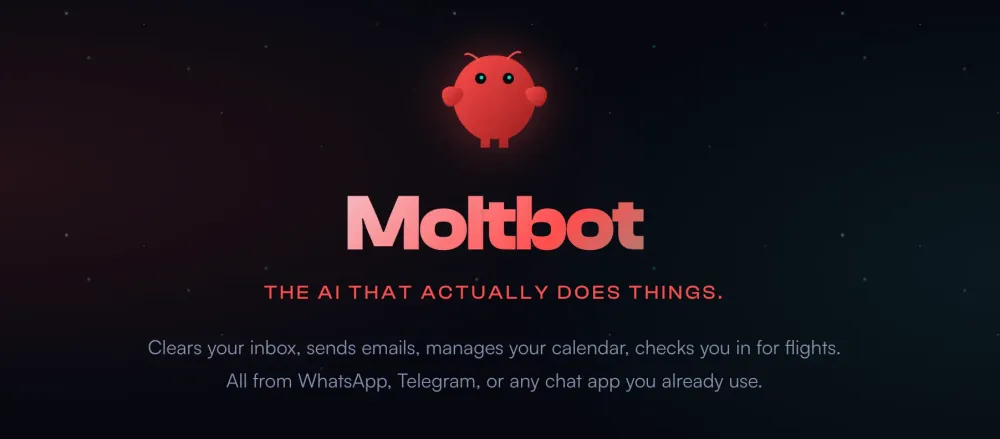
Meet Moltbot (née Clawdbot, now also answering to OpenClaw). Created by independent developer Peter Steinberger, this open-source agent has become the unexpected mascot for 2026's biggest AI trend: the shift from conversation to action.
The Lobster That Ate Silicon Valley
Moltbot is disarmingly simple in concept and terrifying in execution. Unlike Siri or Alexa, those digital assistants that confidently misunderstand your requests. Moltbot runs locally on your machine with shell access, file system permissions, and the ability to control your browser, calendar, and email. It communicates through WhatsApp, Telegram, or Slack, creating a persistent presence that feels less like a tool and more like a particularly capable intern who never sleeps.
The origin story is almost accidental. Steinberger initially built it to feed images into coding models. The breakthrough came when he sent a voice memo and watched his creation autonomously detect the audio format, locate his OpenAI API keys, transcribe the message using Whisper, and type a response. "That was the moment I was like, holy shit," Steinberger told Wired. "Those models are really creative if you give them the power."
And creative they are. Early adopters report having their Moltbot instances manage morning briefings, resolve calendar conflicts, handle invoices, and even monitor children's homework schedules. One CTO gave his bot credit card details and Amazon login credentials, letting it autonomously scan messages and place orders (he later turned message scanning off after it actually bought things).
This is the "vibe" that has the tech world buzzing: an AI that doesn't just answer questions but handles things.
The Reality Behind the Hype
If this sounds like a security nightmare waiting to happen, you're not wrong. Security researchers at Snyk have already demonstrated how Moltbot's architecture—specifically its ability to execute shell commands and read emails, makes it vulnerable to prompt injection attacks. An email containing hidden instructions could theoretically trick the agent into transferring money or exfiltrating data.
The default settings include human-in-the-loop confirmations, but the temptation to enable "full auto" mode is strong, and the risks are real. This tension between capability and safety defines the current moment in agentic AI.
What's fascinating about Moltbot isn't just its functionality—it's what it represents: user agency over vendor lock-in. You bring your own API keys (Claude, GPT, Gemini), you host it on your own hardware, and you decide exactly how much rope to give it. In an era of increasingly walled-garden AI ecosystems, there's something rebellious about a tool that runs locally and answers to you alone.
From Lobsters to Ecosystems: The Agentic AI Horizon
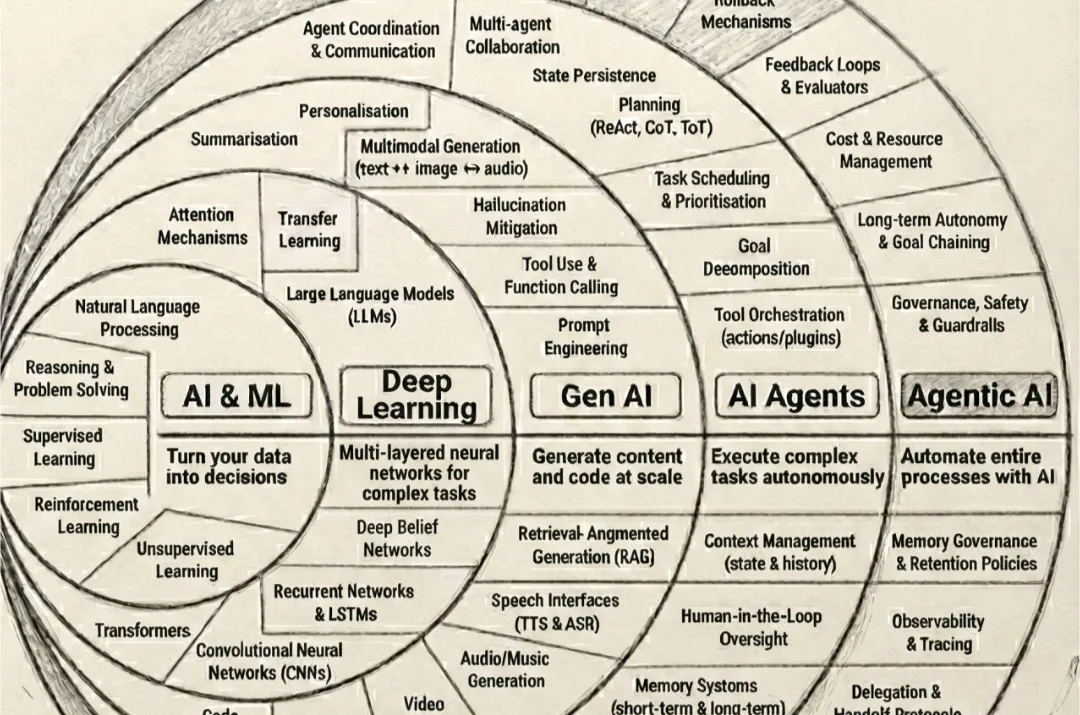
Moltbot's viral moment (and subsequent trademark-driven rebranding) coincides with a broader industry shift. According to IBM's recent analysis, 2026 is the year "systems, not models" define AI leadership.
We're moving from the era of "Ask ChatGPT" to the era of orchestrated agency.
Here's what the near future actually looks like:
1. The Rise of "Super Agents"
Single-purpose agents (the email writer, the code assistant) are evolving into cross-functional orchestrators. IBM's Chris Hay calls these "super agents", systems that operate across your browser, IDE, and inbox without requiring you to manage a dozen separate tools.
Moltbot is essentially a proto-version of this: one interface, multiple capabilities, persistent memory.
2. Agent-to-Agent Communication Becomes Standard
Remember when every app had its own messaging system? We're there with AI agents right now. But 2026 sees the maturation of protocols like Anthropic's MCP (Model Context Protocol), Google's A2A, and IBM's ACP. The Linux Foundation's new Agentic AI Foundation is pushing for open governance standards. Soon, your Moltbot won't just talk to you, it will negotiate with your colleague's scheduling agent, interact with enterprise resource planning agents, and coordinate with logistics systems.
3. The "Objective-Validation Protocol"
IBM researcher Ismael Faro predicts we'll move beyond "vibe coding" (the current trend of loose, conversational programming) to structured "Objective-Validation Protocol."
Users will define goals and validation criteria while collections of agents autonomously execute, requesting human approval only at critical checkpoints. This is the difference between asking an AI to "make a website" and telling it to "increase conversion rates by 15% while maintaining brand compliance", and letting it iterate until success metrics are hit.
4. Physical AI Enters the Chat
The most significant expansion won't be in software alone. NVIDIA's Jensen Huang has declared this the "age of physical AI," and 2026 marks the transition from demonstrations to commercial pilots for humanoid robots.
Imagine Moltbot not just ordering your groceries but coordinating with warehouse robots to ensure delivery, or not just scheduling your meeting but controlling the conference room environment and taking autonomous minutes.
5. Governance-as-Code Becomes Non-Negotiable
Here's the sobering prediction: Gartner forecasts that over 40% of agentic AI projects will be canceled by 2027 due to escalating costs, unclear ROI, or inadequate risk controls.
The wild west of giving your AI shell access and credit cards (looking at you, Moltbot early adopters) is ending. Enterprises are implementing "AI firewalls," agent identity management systems, and policy-driven schemas that balance autonomy with control.
The Interface Is the Battlefield
Perhaps the most underappreciated shift is happening at the interaction layer. Moltbot's choice to operate through existing messaging apps (Telegram, WhatsApp) isn't just convenience, it's a glimpse of the post-ChatGPT interface. As one IBM expert noted, "Whoever owns that front door to the super agent will shape the market."
We're moving away from the "chat with the oracle" model toward ambient, asynchronous agency. You won't prompt your AI; you'll message it like a colleague. It will update you like an assistant. It will anticipate rather than respond.
The Lobster's Lesson
Moltbot's chaotic launch week, complete with crypto scammers, accidental GitHub credential leaks, and a mascot that briefly sprouted a disturbingly handsome human face, encapsulates the current state of agentic AI.
It's messy, slightly dangerous, utterly compelling, and technically illegal in certain configurations (giving an AI your credit card might violate your bank's terms of service).
But it's also inevitable.
The viral enthusiasm for a tool that actually does things that transforms AI from an impressive parlor trick into a functional teammates, reveals a hunger that ChatGPT-style chatbots haven't satisfied. We don't want AI that can pass the bar exam; we want AI that can book the restaurant, negotiate the reservation time with our friend's AI, add it to our calendar, and order the birthday gift because it remembered the date from three years ago.
That future is arriving faster than expected. Whether it arrives as Moltbot, OpenClaw, or some yet-to-be-named "Agentic Operating System," one thing is clear: the age of passive AI is ending. The age of agentic action has begun.
Just maybe keep it away from your credit cards for now.
Go Back